
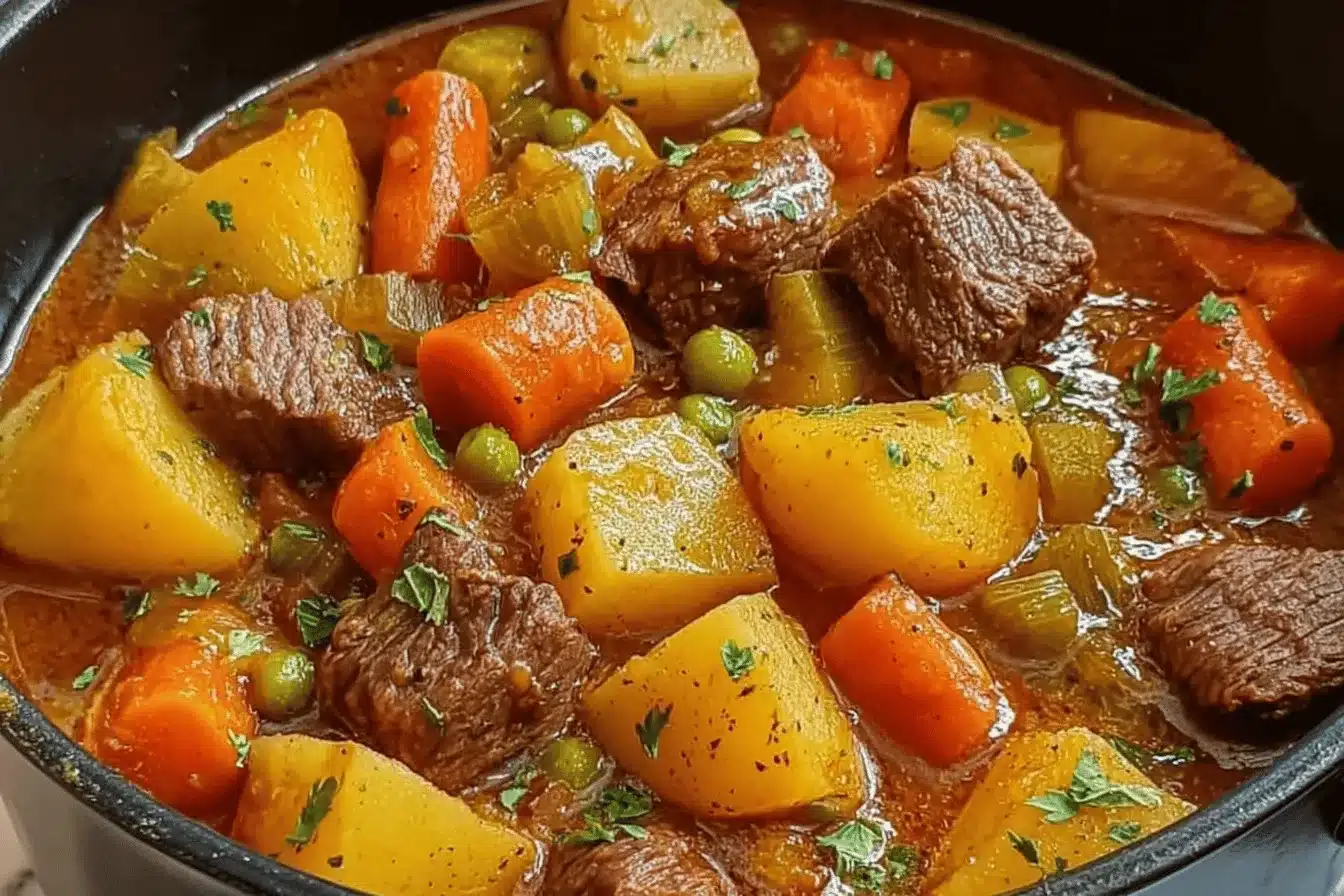
Classic Homemade Beef Stew
Introduction
Discover the timeless comfort of homemade beef stew with this classic one-pot recipe. Perfect for cozy dinners, this hearty dish combines tender beef, fresh vegetables, and a rich, flavorful broth. Whether you’re looking to warm up on a chilly evening or impress guests with a wholesome meal, this recipe is simple to prepare and perfect for all skill levels in the kitchen.
Detailed Ingredients with Measures
The secret to a flavorful beef stew lies in using fresh, quality ingredients. Here’s what you’ll need for this recipe:
• 2 pounds of beef chunks or stew beef, cut into bite-size pieces
• 1 large onion, diced
• 3 medium carrots, sliced
• 3 medium potatoes, peeled and cubed
• 3 celery stalks, chopped
• 3 cloves garlic, minced
• 4 cups beef broth
• 3 tablespoons tomato paste
• 2 tablespoons flour
• 2 tablespoons olive oil
• 1 teaspoon dried thyme
• 1 bay leaf
• Salt and black pepper, to taste
• Fresh parsley, chopped (for garnish)
Prep Time
Preparing this delicious beef stew is straightforward. Dedicate around 20 minutes to prep your ingredients, ensuring the vegetables are washed, peeled, chopped, and your beef chunks are cut into even sizes for uniform cooking.
Cook Time, Total Time, Yield
Cook time is approximately 2 hours, allowing the flavors to fully develop and the beef to become tender. Combined with the prep, the total time for this recipe is around 2 hours and 20 minutes. This recipe yields a hearty stew for 6 servings and is perfect for family meals or leftovers.
Follow these easy steps to create a one-pot masterpiece that will quickly become a family favorite. Serve with crusty bread to soak up the rich broth, and enjoy the simple joys of a warm, hearty meal.
Detailed Directions and Instructions
Step 1: Prepare the Ingredients
– Gather all ingredients required for the recipe. Ensure that the beef is cut into bite-size chunks, the potatoes, carrots, and celery are diced, and the onion and garlic are finely chopped.
– Pat the beef dry with paper towels to remove excess moisture, as this helps it brown properly during cooking.
Step 2: Brown the Beef
– Heat a large, heavy-bottomed pot or Dutch oven over medium-high heat. Add a small amount of oil to coat the bottom of the pot.
– In batches (do not overcrowd the pan), add the beef chunks and sear them until browned on all sides. Remove the beef from the pot and set aside on a plate.
Step 3: Sauté the Vegetables
– Reduce the heat to medium and add the chopped onion and garlic to the pot. Cook for about 2-3 minutes, stirring frequently, until they become soft and fragrant.
– Add the diced carrots and celery to the pot, cooking for an additional 3-5 minutes until slightly softened.
Step 4: Deglaze the Pot
– Pour some liquid (such as beef broth or wine) into the pot while scraping the bottom with a wooden spoon to deglaze it. Incorporate the flavorful browned bits stuck to the bottom into the liquid.
Step 5: Add Liquids and Seasonings
– Return the browned beef to the pot and add the rest of the beef broth or your choice of liquid.
– Season with salt, pepper, and any herbs or spices desired, such as thyme or bay leaves. Stir well to combine all the ingredients.
Step 6: Simmer the Stew
– Cover the pot with a lid and reduce the heat to low. Allow the stew to simmer gently for about 1.5 to 2 hours, or until the beef becomes tender. Stir occasionally to ensure even cooking.
Step 7: Add the Potatoes
– After the beef is tender, add the diced potatoes to the pot. Cook for an additional 20-30 minutes, or until the potatoes are fork-tender.
Step 8: Thicken the Stew (Optional)
– If you prefer a thicker stew, create a slurry by mixing a small amount of cornstarch or flour with water. Gradually stir the slurry into the stew and simmer for a few more minutes until the desired consistency is reached.
Step 9: Final Adjustments
– Taste the stew and adjust seasoning as needed. Add more salt, pepper, or herbs, if desired.
– Remove the bay leaves (if used) before serving.
Step 10: Serve and Enjoy
– Serve the beef stew hot in bowls, garnished with fresh parsley if desired. Pair it with crusty bread or a side of your choice.
Notes
Note 1: Choosing the Beef
– Use chuck roast or a similar cut of beef suitable for slow cooking, as it becomes tender and flavorful when simmered.
Note 2: Vegetable Options
– Feel free to swap out or add vegetables like parsnips, turnips, or peas based on your preference.
Note 3: Storage and Reheating
– Store leftover stew in an airtight container in the refrigerator for up to 3-4 days. Reheat gently on the stovetop or in the microwave.
– The flavors often develop even more after a day, making it a great make-ahead meal.
Note 4: Freezing Tips
– Beef stew freezes well. Allow it to cool completely before transferring it to freezer-safe containers. Freeze for up to 3 months, and thaw overnight in the refrigerator before reheating.
Note 5: Adjusting Consistency
– If the stew thickens too much while simmering, add additional beef broth or water as needed to loosen it up.
Cook techniques
Brown the beef properly
Browning the beef is an essential step to develop deep, rich flavors in the stew. Make sure to sear the meat in small batches over medium-high heat to avoid overcrowding the pot, which could result in steaming instead of browning.
Deglaze the pan
After removing the browned beef, deglaze the pot with a liquid such as broth or wine. This helps to scrape up all the browned bits from the bottom of the pot, adding an extra layer of flavor to the stew.
Use a heavy-bottomed pot
It’s best to use a heavy-bottomed Dutch oven or large pot that distributes heat evenly and prevents burning during long cooking periods.
Simmer low and slow
Cook the stew on low heat for several hours to allow the flavors to meld and the beef to become tender. Patience is key for the best results.
Add vegetables at the right time
To avoid mushy vegetables, add sturdier ones like carrots and potatoes once the stew has been simmering for some time, ensuring they cook to the perfect texture.
FAQ
Can I make this stew ahead of time?
Yes, beef stew tastes even better the next day as the flavors continue to develop. Store it in an airtight container in the fridge and reheat gently on the stovetop.
Can I freeze the beef stew?
Absolutely. Allow the stew to cool completely before transferring it to a freezer-safe container. It can be frozen for up to 3 months. Thaw overnight in the refrigerator and reheat before serving.
What substitutions can I make?
You can substitute the beef with chicken or other protein options. Additionally, you can experiment with different vegetables or add herbs like thyme or rosemary for a unique flavor profile.
How can I thicken the stew?
If the stew is too thin, you can thicken it by making a slurry with flour or cornstarch and water, then stir it into the simmering stew. Alternatively, mash a few of the cooked potatoes to naturally thicken the broth.
What if I don’t have a Dutch oven?
You can use any large, heavy-bottomed pot or even a slow cooker. Adjust the cooking time if using a slow cooker, which may require additional hours on low heat.
Conclusion
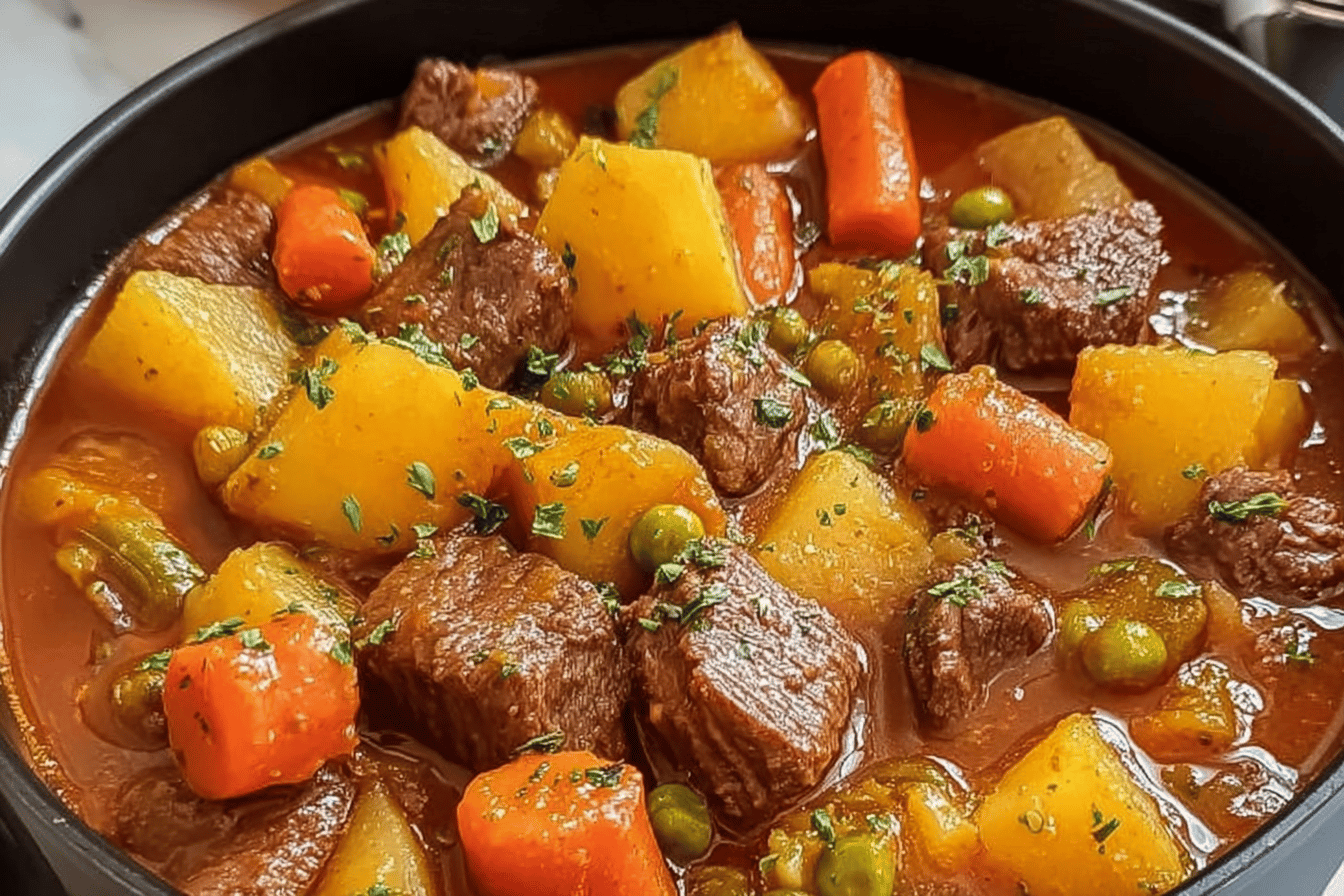
The classic homemade beef stew is a comforting and hearty dish that brings warmth to any table. Its rich flavors and tender beef pieces, combined with fresh vegetables and aromatic herbs, make it a timeless favorite. Whether you’re cooking for family, entertaining guests, or simply craving a cozy meal, this easy one-pot recipe guarantees satisfaction. Remember, the beauty of this stew lies in its versatility—feel free to adapt the ingredients to suit your taste or what you have on hand.
More recipes suggestions and combination
Hearty Chicken Stew
Try a similar one-pot dish with chicken as the main protein. Add some potatoes, carrots, and a touch of cream for a rich and irresistible flavor.
Vegetarian Lentil Stew
For a meat-free option, replace beef with lentils and add a variety of root vegetables like turnips, parsnips, or sweet potatoes for a nutrient-packed dish.
Beef and Red Wine Stew
Enhance your classic beef stew by including a splash of red wine for depth of flavor. Pair it with rustic bread to soak up the delicious broth.
Spicy Beef and Bean Chili
For something with a kick, transform the beef stew concept into a spicy chili by adding beans, chili powder, cumin, and paprika.
Creamy Mushroom and Beef Casserole
Merge the flavors of stew with a casserole by simmering beef and mushrooms in a creamy sauce, then topping it with crispy breadcrumbs for texture.